


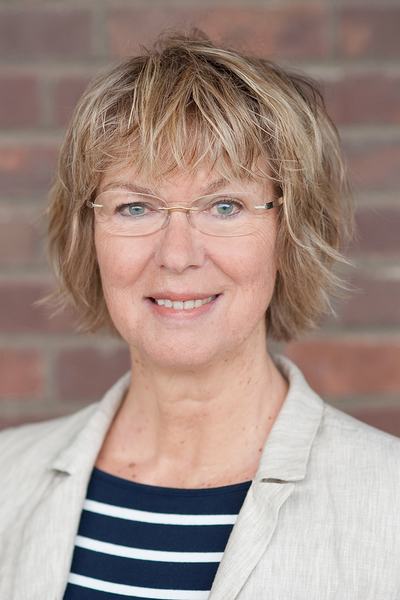


Marie von Kuck, born in Leipzig in 1971, began vocational training as a machine and plant fitter - combined with a program leading to a university entrance qualification - in 1987. Shortly thereafter, she became active in the opposition movement in East Germany. During the political upheaval of 1989, she abandoned her training and moved to Berlin in 1990. Following various roles in psychiatry and nursing, she went on to qualify as a state-certified occupational therapist. In 1997, Marie von Kuck began studying puppetry at the Ernst Busch Academy of Dramatic Arts, and in 2017, she completed training as a theater therapist.
Marie von Kuck writes reportages, radio plays, and radio features - many of them award-winning. In her journalistic work, she consistently focuses - with a critical eye - on issues of social injustice and human rights, as Volker Lilienthal highlighted in his 2019 laudatory speech for the Otto Brenner Prize. As one example, Lilienthal pointed to the issue of police violence, which von Kuck brought into the public consciousness "long before others had discovered what has now become an almost fashionable topic."
Drawing on a phrase by the Protestant publicist Robert Geisendörfer, he described the investigative journalist as a "voice for the voiceless," noting that "she brings those who are overlooked and disregarded out from the shadows of our ignorance." Other subjects covered in her journalistic work include right-wing extremism, psychiatry, and violence against women.
Marie von Kuck has received numerous awards for her work, including the German Social Prize (Deutscher Sozialpreis) in 2012, third prize at the Otto Brenner Prize for Critical Journalism in 2019, the 2022 Prix Europa in the category of "Best European Radio Investigation of the Year," and the Robert Geisendörfer Prize in 2023.